.png)


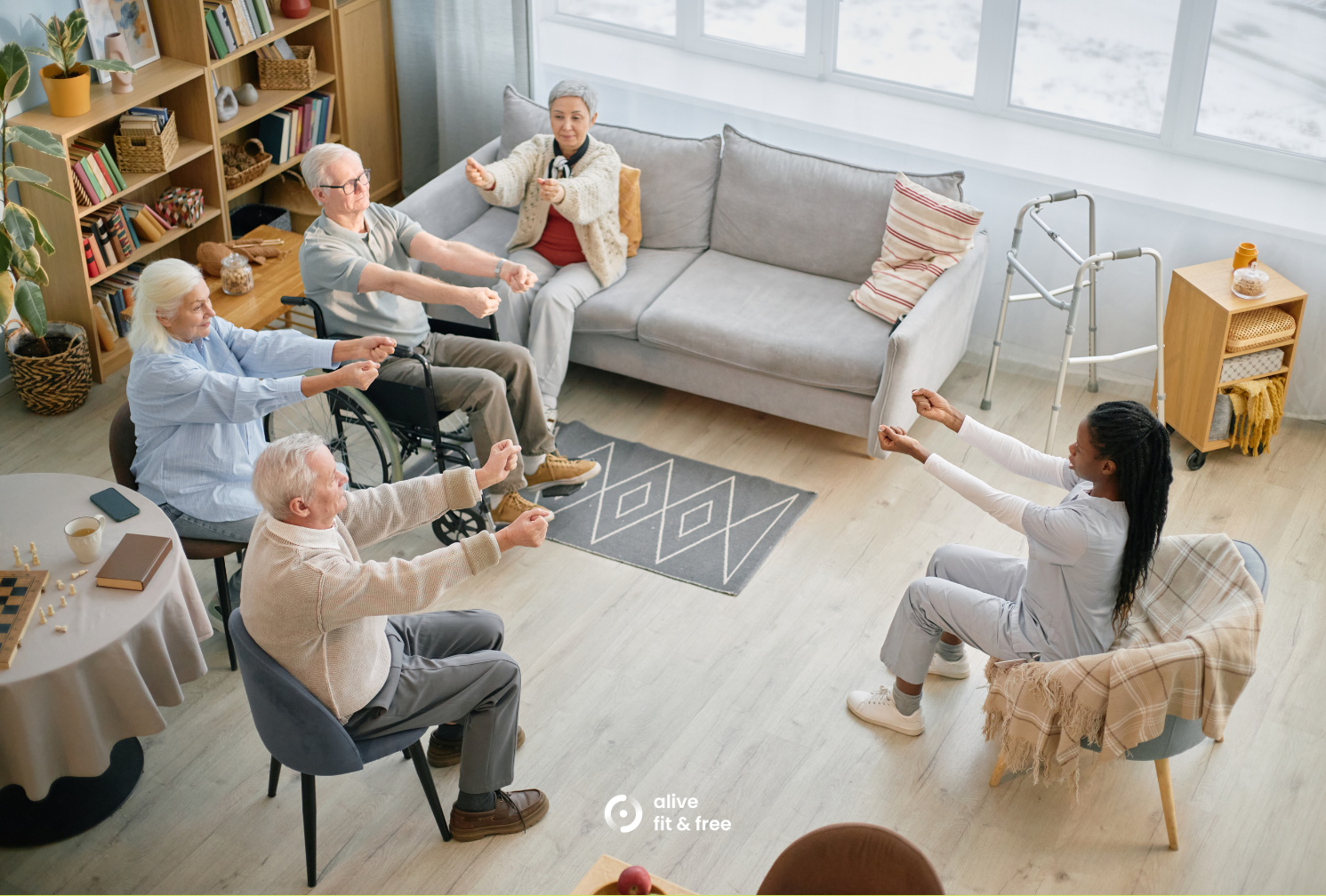
For many families, this month carries both education and emotion. It shines a light on a condition that affects millions of people, and it also touches very personal fears: What if memory changes get worse? How can a loved one stay engaged? Is there anything helpful that can still be done?
While movement is not a cure for dementia, it is one of the most hopeful, practical tools available for supporting brain health, mood, daily function, and quality of life. When families are facing something as overwhelming as Alzheimer’s or other forms of dementia, they need realistic encouragement—things they can actually do at home and in community settings. That is exactly why Neuro.Up was created: to turn brain‑body science into a warm, doable class for people living with dementia or Alzheimer’s and the caregivers who support them.
How movement supports memory
The connection between movement and brain health is stronger than many people realize.
Physical activity helps improve blood flow to the brain and supports thinking, learning, and emotional balance. Research shows that adults who stay active have a lower risk of cognitive decline and dementia than those who are inactive, and that certain movement forms—like rhythmic or dance‑based activities—may help memory, executive function, and mood in people with mild cognitive impairment.
This matters not only for prevention, but also after a diagnosis. Even when someone is already living with dementia, movement can still support function and create meaningful moments of connection. A short walk, a rhythmic seated routine, a few stretches with music, or a simple balance exercise can help a person feel more awake, more organized in their body, and more connected to the present moment. Families often think in terms of memory alone, but movement can influence mood, confidence, posture, sleep, and engagement too.
Neuro.Up takes these ideas and builds them into a guided, repeatable experience so families do not have to figure everything out on their own.
Rhythm, routine, and real‑life skills
One of the reasons movement supports memory is because it creates rhythm and routine. The brain loves repetition. When a person does the same short sequence at the same time each day, it becomes easier to cue and complete. This might be a morning march in place, a seated reach‑and‑clap series after breakfast, or a short walk before lunch. Over time, these patterns become familiar anchors in the day.
Movement also supports daily function because real life is rarely “single‑task.” Everyday activities ask the brain and body to work together: walking while listening, turning while carrying something, standing while talking. This is why brain‑smart classes often include simple dual‑task challenges, where a person moves while counting, naming, clapping, or responding to a cue. These combinations can help support attention, coordination, and practical confidence.
Neuro.Up is built around these real‑life skills. In class, participants practice:
- Gentle, rhythmic movement (seated or standing)
- Cross‑body patterns that ask both sides of the brain to communicate
- Simple memory or attention tasks layered onto movement
- Everyday transitions like sit‑to‑stand, turning, and stepping
Instead of random exercises, Neuro.Up uses sequences that echo what daily life actually asks the brain and body to do.
Emotional benefits for participants and caregivers
.JPG)
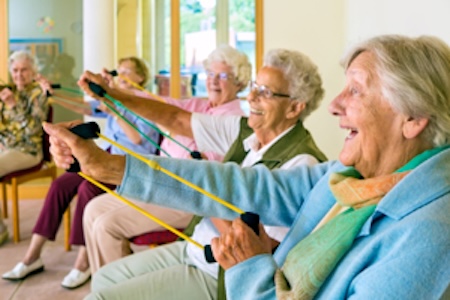
Dementia affects more than memory. It can change confidence, identity, and the sense of connection to others. Gentle exercise can provide moments of success, rhythm, laughter, and social interaction. Those moments may look small from the outside, but inside a family they can mean everything. A person who lights up while moving to music, smiles during a familiar pattern, or feels steadier getting out of a chair is experiencing something deeply important: participation.
Care partners benefit too. Alzheimer’s and dementia place a heavy load on spouses, adult children, and family members. Shared movement can become one of the few times both people experience something positive together. It can lower tension, create a simple focus, and offer a brief break from the constant pressure of “managing.”
Neuro.Up is intentionally welcoming to care partners. They can join the class, move at their own level, and learn simple patterns and cues to bring home. Class becomes more than an isolated “activity”—it becomes a practice ground for more ease and connection in daily life.
What makes Neuro.Up different
So what does brain‑smart movement look like in practice? Usually it is gentle, rhythmic, repetitive, and easy to follow. It includes clear cues, simple instructions, and options for seated, supported, or standing participation. It respects fatigue. It allows for pauses. It uses music, breath, and patterns to help the nervous system settle. Instead of demanding perfect performance, it invites participation.
Neuro.Up takes these principles and adds a few key features:
- Designed for neuro conditions from the start – created specifically with dementia, Alzheimer’s, Parkinson’s, and other brain changes in mind, rather than being a general class that is “modified.”
- Brain‑body and dual‑task focus – movement is paired with simple thinking and memory tasks so participants can practice the kinds of combinations real life requires.
- Seated and standing options in every class – no one is singled out; people can choose what feels safest and best that day.
- Nervous‑system aware pacing – breath, rhythm, and short reset moments are built in so the class supports, rather than overwhelms, sensitive systems.
At home, movement can stay simple: five minutes of marching, reaching, tapping, and breathing with favorite music; a short walk; or a familiar routine learned in class. Safety still matters—clear space, good footwear, a sturdy chair, and permission to pause or simplify.
.jpg)
A hopeful next step for Alzheimer’s & Brain Awareness Month
June is a meaningful reminder that brain health deserves attention, compassion, and action. For families living with dementia, one of the most powerful messages is that support can still be practical and joyful. Movement may not change everything, but it can improve a moment, a morning, or a whole day. It can create steadiness, lift mood, stimulate attention, and help people feel more like themselves.
That is why movement belongs in the conversation during Alzheimer’s & Brain Awareness Month. It is accessible, adaptable, and deeply human. For those who want more than a list of tips, Neuro.Up offers a next step—a movement option designed specifically for brains and bodies living with dementia, Alzheimer’s, Parkinson’s, and the care partners who walk beside them.
Whether the next step is a short walk, a seated routine at home, or joining Neuro.Up virtually or on YouTube, every bit of movement can be an act of support for memory, mood, and quality of life.
Please reach out if you would like more information about participating in our Neuro.Up classes.
Vickie
.JPG)
%20(1).png)