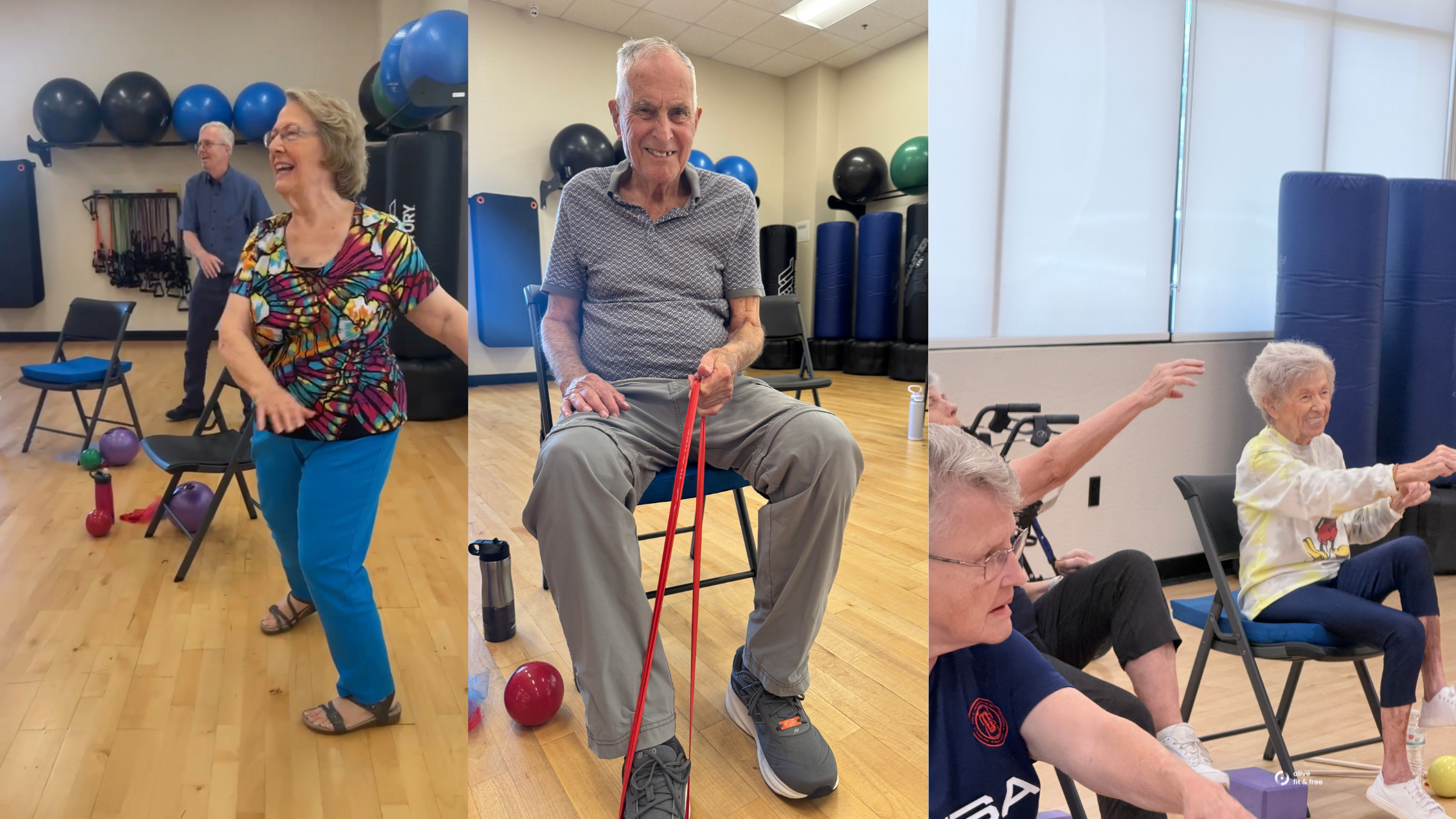
.png)



Alive, Fit & Free Journal
Helping People Live Better for Longer™
Strong for Life: What Are You Training For?
By Vickie Aigner
Founder & CEO | Alive, Fit & Free
Published September2026
Strong enough to keep living.
Curious enough to keep learning.
Brave enough to keep beginning.
At 73, I've been thinking about what it really means to get stronger.
And I've realized something:
I'm not exercising because I want to become really good at exercising.
I'm training for my life.
I'm training for the things I want to keep doing.
I want to travel.
I want to explore new places.
I want to keep teaching.
I want to keep building my business.
I want to keep learning and creating.
And I want to have the strength and energy to say yes when life presents me with something unexpected.
That's what being Strong for Life means to me.
Exercise Is Not the Destination
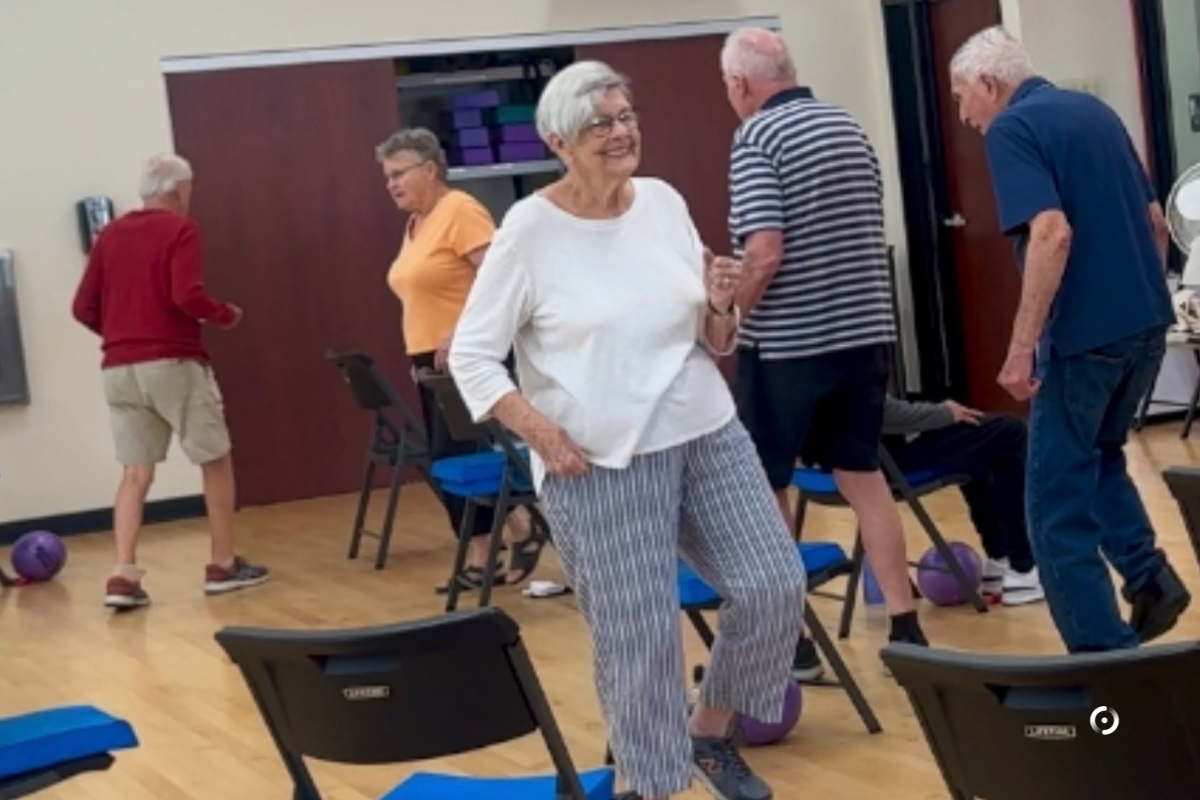
It's easy to think about exercise in terms of numbers.
How many repetitions?
How much weight?
How many minutes?
How many steps?
Those things can be useful.
But I think there's a bigger question we should be asking:
What are those minutes of movement helping you do?
A squat isn't just a squat.
It's getting out of a chair.
It's getting out of your car.
It's getting up and down from the floor.
It's having the strength to move through your day without every movement feeling like a major event.
.png)
Balance isn't about standing on one foot just so you can say you did it.
Balance helps us navigate the unexpected.
A curb.
A change in direction.
A slippery surface.
A crowded room.
A suitcase rolling behind you.
A moment when you lose your footing and need your body to respond.
Mobility isn't simply about stretching.
It's about having the freedom to move.
And strength isn't just about muscle.
Strength gives us options.
Your Brain Is Part of the Workout
As we get older, we also need to think beyond physical strength.
Our brains need opportunities to engage, too.
That's one reason I love incorporating things like:
Coordination.
Rhythm.
Cross-body patterns.
Changing directions.
Reaction.
Music.
Thinking while moving.
.png)
Sometimes we give the brain something familiar.
And sometimes we give it something new to figure out.
It might feel awkward.
You might mess it up.
You might laugh.
Good.
That's part of the experience.
Movement doesn't have to be complicated to be meaningful.
Sometimes the most valuable thing we can do is simply give our brain and body a reason to pay attention.
Move the body. Challenge the brain. Stay engaged.
Strength Is More Than Physical
This is also why I continue to believe in the Four Pillars of Health™:
Mental.
Emotional.
Physical.
Energetic.
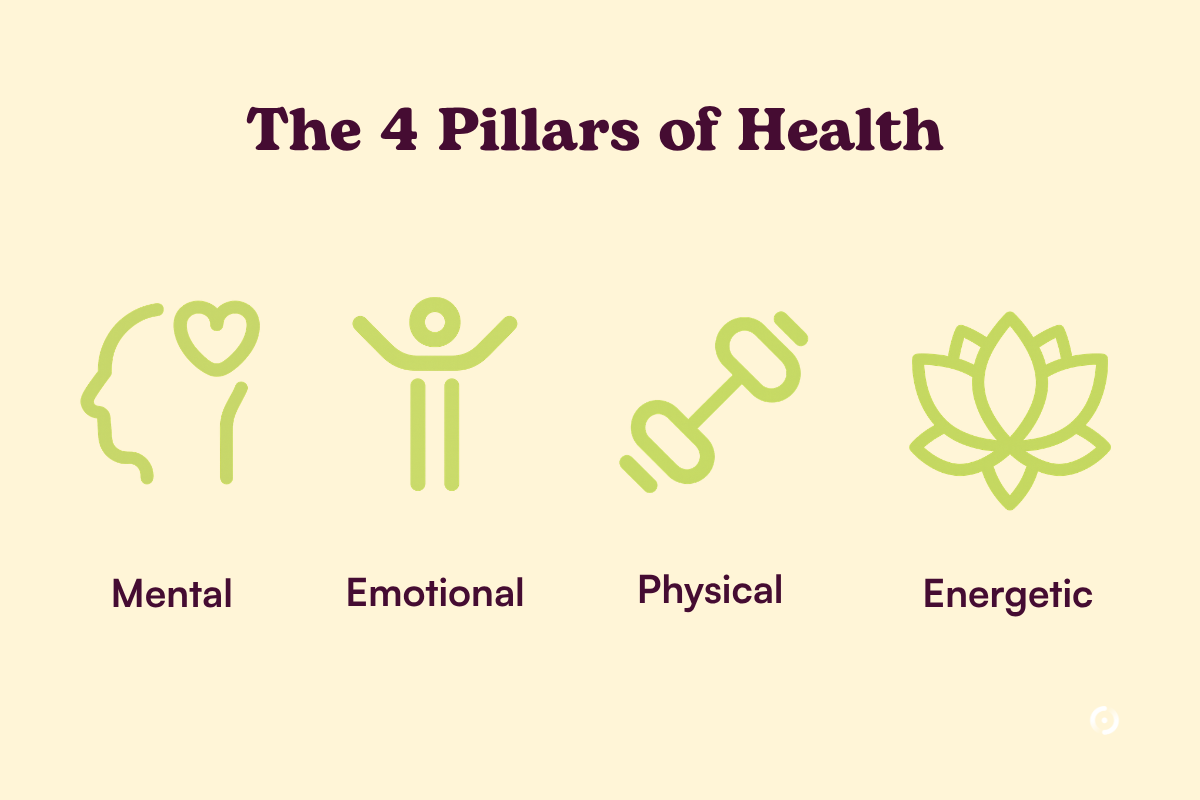
Healthy aging isn't about focusing on only one piece of ourselves.
We are whole people.
Our physical strength matters.
So does our mental engagement.
So does our emotional well-being.
So does our energy for participating in the things that matter to us.
Because what good is getting stronger if we don't use that strength to live?
RESEARCH SPOTLIGHT
Why Functional Strength Matters as We Age
When we talk about getting stronger, it's easy to think about stronger muscles as the end goal.
But research suggests that strength and exercise become especially meaningful when they help us function better in everyday life.
A 2024 systematic review and meta-analysis of 16 studies found that functional exercise programs for adults age 60 and older improved several measures of physical function, including gait speed, balance, the ability to rise from a chair, and performance on the Timed Up and Go test.
A newer 2026 systematic review and meta-analysis similarly found that functional task training improved measures of balance, mobility and walking performance compared with control interventions.
That's important because these aren't just numbers on a fitness assessment.
They represent things we use every day.
Standing up.
Walking safely.
Changing direction.
Moving through our environment.
Getting where we want to go.
Another systematic review of resistance training in older adults found improvements in muscular strength and functional fitness, reinforcing the value of strength training as we age.
The Takeaway
The goal isn't simply to become stronger in the gym or during a class.
The goal is to build the physical capacity that helps you participate in your life.
That's why I encourage you to think beyond:
“How fit am I?”
and ask:
“What do I want my body to help me keep doing?”
That question changes everything.
Because when exercise has a purpose, we're not just training our muscles.
We're training for life.
Research References
- The effect of functional exercise program on physical functioning in older adults aged 60 years or more: A systematic review and meta-analysis of randomized controlled trials.
- Effects of functional task training on physical performance in older adults: A systematic review and meta-analysis.
- Different resistance training volumes on strength, functional fitness, and body composition of older people: A systematic review with meta-analysis.
A Note from Vickie
I'm Training for What's Next
At 73, I've realized that one of the things I value most is having the ability to say yes.
Yes to travel.
Yes to learning something new.
Yes to an unexpected opportunity.
Yes to continuing to build and create.
And recently, an unexpected opportunity came my way.
For some time, I've had a vision of exploring how Neuro.UP might eventually reach people beyond the communities we're serving today. I didn't know exactly what that would look like—or when it might happen.
Then an opportunity presented itself.
In September, I'll be heading to Cannes, France, for a senior-living convention.
I don't know what will come from it.
I'm not going with a big announcement or a perfectly mapped-out plan.
Because I've learned something over the years:
Have a vision—but don't become so attached to the plan that you miss the possibilities.
Sometimes the next chapter doesn't arrive looking like the chapter you expected.
Sometimes a door opens.
And you simply have to decide whether you're willing to walk through it.
At 73, I'm still learning that lesson.
And I'm still training for the life I want to live.
I'm going to listen. Learn. Meet people. Ask questions. And stay curious.
And that, to me, is part of being Strong for Life.
We don't know everything that's waiting for us around the corner.
But we can prepare ourselves to participate when something comes along.
That's what I'm training for.
Not just stronger muscles.
A stronger, more capable, more curious life.
And I can't wait to see what comes next.
Vickie
Live Better for Longer™
September Reflection
What Are You Training For?
Your answer may be completely different from mine.
Maybe you're training to:
- Stay independent.
- Continue living in your own home.
- Travel.
- Play with your grandchildren.
- Walk your dog.
- Garden.
- Dance.
- Pick something up from the floor.
- Get through the grocery store without feeling exhausted.
- Keep working.
- Volunteer.
- Take a class.
- Feel more confident in your body.
There is no wrong answer.
The important thing is that you have a reason.
Because when we know what we're training for, exercise becomes more meaningful.
We're not simply trying to become "fit."
We're preparing ourselves for participation.
For independence.
For experiences.
For relationships.
For possibility.
For life.
Keep moving.
Keep learning.
Keep living.

Vickie
Live Better for Longer™